October 30, 2026
Fake AI Models: Supply Chain Risk Management for NIST 800-171
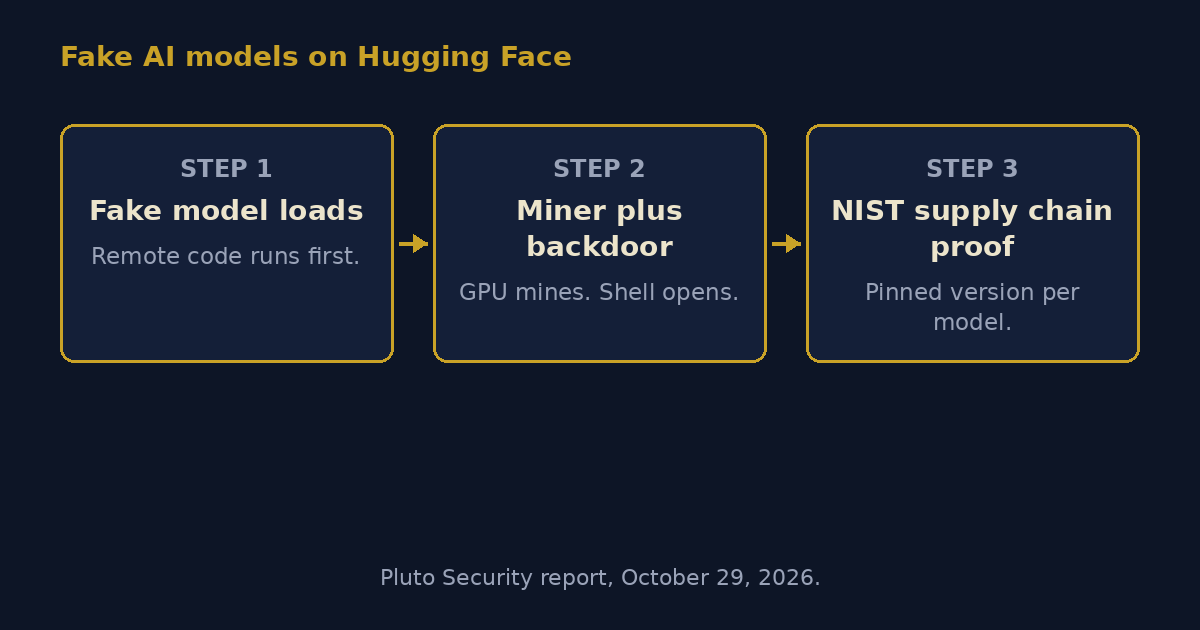
Supply chain risk management covers every component you did not build. AI models are components. A fake model that runs code is a supply chain event. Your record must treat it that way.
The campaign in plain words
Pluto Security published its Load/Mine report on October 29, 2026. The report tracks 31 fake model repositories on Hugging Face. The models pose as small Qwen2 test checkpoints. Loading one with remote code enabled runs the publisher Python code first. Remote code means code supplied by the model repository. The code runs before any model weights load. The payload mines crypto. Some builds open a reverse shell too. A reverse shell gives the attacker direct access to the host.
Downloads across the campaign and linked models passed 32,000. That figure counts downloads, not confirmed infections. The second wave stayed live eight days after Pluto reported it. Hub scanners missed the payload. They check weight formats, not what the model Python code does.
What the record must show
First, the inventory of AI models in scope, with publisher, repository, and version. Second, the vetting rule: no remote code for an unreviewed model. Third, the review record for each model, with the reviewer and the date. Fourth, the loading settings for each model in use. Fifth, the hunt result for any listed model your team loaded. Sixth, the rebuild and credential rotation record for any suspect host.
Pin each model to a reviewed version. A floating reference that pulls the newest upload can pull the next fake wave. Record the pinned version with the review date. That pair is the evidence.
PolicyCortex does not scan AI models. PolicyCortex helps teams link proof to requirements.
Sources
- Pluto Security, Hugging Face Malware Campaign: Load/Mine, published October 29, 2026
- BleepingComputer, Hugging Face malware campaign returns to hijack GPUs, October 2026
- Original diagram by PolicyCortex
Next step
Write the vetting rule and the pinned version for each model into your record.